Pastoral note
Spirit and the inner life
When this page speaks about spirit, it refers to the inner life turned toward God, the life of grace, and the person's openness to the Holy Spirit.
Interior formation
The inner temple where God desires to dwell.
You are not merely a body, and you are not a soul trapped inside a body. You are a person created by God: body and soul, called to life in the Holy Spirit. Grace fills the soul with light. Sin darkens the inner temple. Confession cleanses, restores, and opens the heart again to God's presence.
The human person
Catholic teaching sees the human person as a unity of body and soul. The body is not bad. The soul is not an escape from the body. God created the whole person for communion with Him.
Pastoral note
When this page speaks about spirit, it refers to the inner life turned toward God, the life of grace, and the person's openness to the Holy Spirit.
Temple of the Holy Spirit
Scripture teaches that the body is a temple of the Holy Spirit. This means the body has dignity and should be treated with reverence, purity, gratitude, and love.
Read and pray
These passages help anchor the Church's reverence for the body in revelation.
Related guides
Interior temple
The soul can be imagined as an interior temple where God desires to dwell. In grace, the temple is bright, ordered, and open to God. In sin, the temple becomes dim, cluttered, and wounded. Christ does not come to destroy the soul but to cleanse, heal, and restore it.
These images can help the heart understand the page's central metaphor: the soul is like an inner sanctuary, and the heart is like the tabernacle where God desires to dwell in grace. When we live in friendship with God, the interior temple is bright with His life. Venial sin wounds love and clouds the windows. Mortal sin extinguishes charity in the heart until Christ restores the soul through repentance and sacramental Confession.
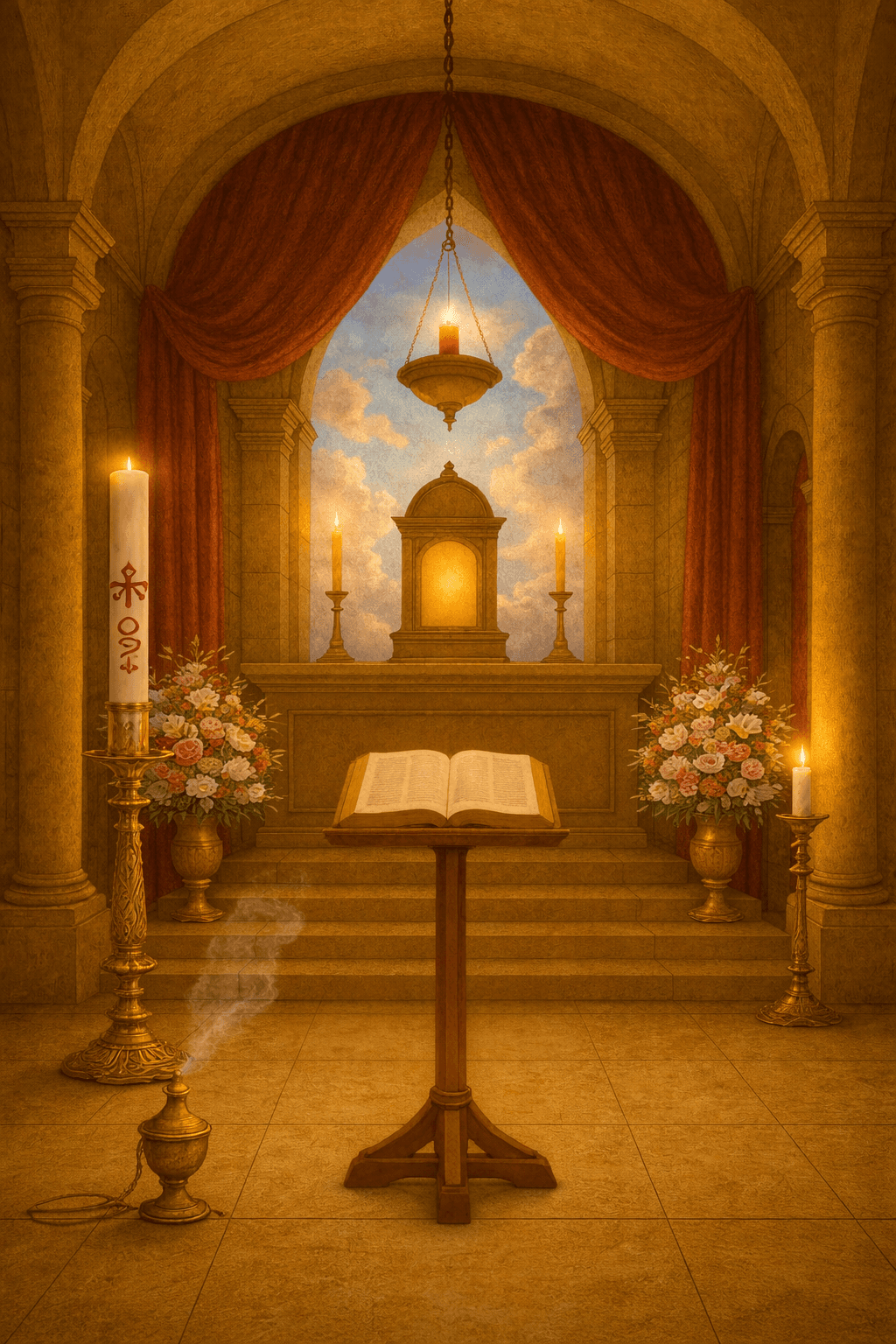
In the state of grace
Grace fills the soul with God's own life. The lamp burns, the sanctuary is bright, and the inner temple is open to prayer, charity, peace, and communion with Christ.
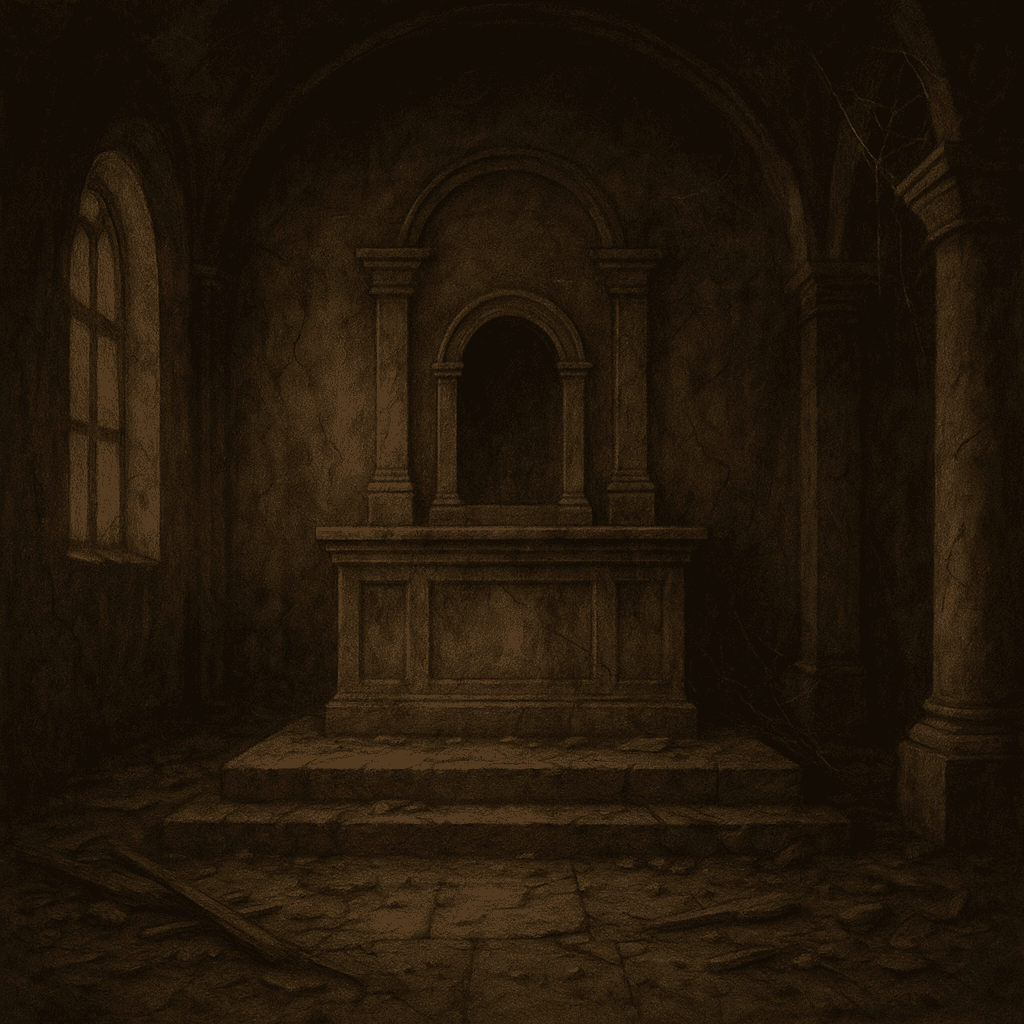
When sin darkens the temple
Sin disorders the interior temple. Venial sin dims spiritual clarity and weakens love. Mortal sin extinguishes charity in the heart, not because God stops calling us, but because the soul must be restored through His mercy in Confession.
Keep the image simple: Christ wants to dwell within you. Prayer opens the doors. Virtue strengthens the temple. The Eucharist nourishes the heart. Confession cleanses what sin has wounded and lets the lamp burn brightly again.
Important
This is a prayerful image for conversion and reflection, not a literal measurement of the soul. Christ's mercy is always greater than the darkness we bring to Him.
Christ is the true Temple and the source of cleansing, healing, and light. This image is meant to help prayer and conversion, not to encourage fear or scrupulous self-measurement.
Grace
Grace is God's life in us. It is not merely good feelings or personal effort. Grace heals, elevates, strengthens, and makes the soul alive in God.
God's life dwelling in the soul, making us holy and pleasing to Him.
God's help in particular moments, moving us toward good and away from sin.
The love of God poured into the heart, making the soul alive with divine love.
Stable habits of good that make the temple strong and beautiful.
Visible signs through which Christ gives grace.
Sin and mercy
Sin is not merely breaking a rule. Sin wounds love, disorders the soul, darkens the conscience, weakens virtue, and turns the heart away from God.
Pride closes the heart to truth, dependence, and humility before God.
Lust distorts sight and desire, making it harder to see others with reverence.
Unruled anger unsettles peace, wounds relationships, and weakens charity.
Envy makes another person's good feel like a threat instead of a gift.
Greed crowds the heart with possessions, control, and restless grasping.
Gluttony trains the heart to seek comfort without order or gratitude.
Sloth resists the love and effort that keep the temple awake to God.
Catholic teaching
Venial sin wounds charity and dims the soul's clarity.
Catholic teaching
Mortal sin destroys charity in the heart and separates the soul from sanctifying grace until restored through repentance and sacramental Confession.
Pastoral note
God is always calling the sinner home. The purpose of seeing sin clearly is not despair, but mercy and conversion.
Reconciliation
In Confession, Christ acts through the priest to forgive sins, restore grace, heal the soul, and strengthen the person for new life. Confession is not humiliation; it is mercy entering the temple with light.
Name your sins without hiding.
Trust that His mercy is greater than your sin.
Hear the words of forgiveness through the priest.
Let mercy become repair, gratitude, and love.
Leave the confessional with peace and renewed resolve.
Local-only reflection tool
Use this as a prayerful reflection, not as a judgment of your soul. Let the Holy Spirit reveal where light, healing, and mercy are needed.
Daily care
Prayer, Scripture, Eucharist, Confession, virtue, mercy, and forgiveness keep the heart ordered toward God.
prayer
Open the temple doors to God.
Begin and end the day with a simple prayer of offering and surrender.
scripture
Let the Word of God light the interior.
Read one Gospel passage or the daily readings slowly and carry one word into the day.
prayer
Review the day with the Holy Spirit.
Notice grace, bring sins to mercy, and rest in God before sleep.
confession
Cleanse the temple regularly.
Go to Confession with honesty, trust, and the desire to begin again.
eucharist
Receive Christ, the true source of life.
Prepare prayerfully for Mass and receive with gratitude and reverence.
virtue
Strengthen the pillars of the soul.
Choose one contrary virtue and practice it in a concrete daily action.
silence
Let God restore order.
Protect a few quiet minutes where the heart can settle before God.
fasting
Clear away disordered attachments.
Fast in a simple, realistic way that makes room for charity and prayer.
mercy
Let the light inside become love outside.
Turn grace outward in one concrete act of service or compassion.
forgiveness
Remove bitterness from the temple.
Ask for the grace to release resentment and entrust justice to God.
Eucharistic life
In Holy Communion, Christ gives Himself as true food. The Eucharist nourishes the soul, strengthens charity, deepens union with Christ, and makes the person more fully a living temple of God.
Holy Communion is not a symbol-only reminder. Christ gives Himself as true food and true drink so that the soul may live from Him, be strengthened in charity, and grow in communion with His Body, the Church.
Catholics conscious of mortal sin should receive sacramental Confession before receiving Holy Communion. This is not rejection, but reverence for Christ and love for the soul's healing.
The Holy Spirit
The soul in grace is not empty. The Holy Spirit dwells within, giving life, light, strength, conviction, peace, and love.
The indwelling of the Holy Spirit is not a vague spiritual feeling. It is the living presence of God at work in the person who remains in grace, drawing the whole heart toward Christ, holiness, repentance, and love.
The bright temple bears fruit
Prayerful metaphor
Use these images prayerfully. They are not literal doctrine, but a way of reflecting on the soul, grace, sin, and the life of holiness.
The doors
What you allow into your heart shapes the whole interior life.
Reflection: What am I opening my heart to each day?
Related practice: Guard the first and last moments of the day.
The windows
What you look at, imagine, and desire affects clarity within the soul.
Reflection: What have I been letting through the windows of the heart?
Related practice: Protect the eyes and imagination from what darkens the temple.
The altar
The altar represents what you love most and where sacrifice becomes worship.
Reflection: What is truly at the center of my interior life?
Related practice: Offer one attachment or fear to God in prayer.
The lamp
Prayer, charity, and grace keep the lamp of the heart burning.
Reflection: Is the lamp of prayer bright, neglected, or flickering?
Related practice: Keep one daily prayer anchor without fail.
The floor
Daily habits and discipline support every other part of the interior temple.
Reflection: What repeated habit is shaping my soul right now?
Related practice: Choose one realistic daily discipline and keep it small enough to be faithful.
The pillars
Virtues support the soul and make it stable under pressure.
Reflection: Which pillar feels weakest right now?
Related practice: Practice the contrary virtue in one concrete way.
The incense
Prayer rises to God and fills the temple with reverence and praise.
Reflection: Does my prayer rise from obligation alone or from love?
Related practice: Add one act of thanksgiving to your daily prayer.
The cleansing water
Baptism, repentance, and Confession wash the temple and renew life.
Reflection: Where do I need cleansing, healing, or a fresh beginning?
Related practice: Return to your Baptismal identity and prepare for Confession when needed.
The tabernacle image
Christ desires to dwell within the soul in grace and draw the whole person into communion.
Reflection: Am I living as one who has been made for the Lord's presence?
The image of the temple is meant to encourage prayer, conversion, and hope. It should not become a way of obsessively measuring yourself. Let it turn your heart toward Christ.
Digital world
What enters through the eyes, ears, and imagination affects the soul. Technology can serve prayer and learning, but it can also clutter the temple.
Digital life is part of spiritual life. What you watch, hear, repeat, save, and scroll through can either support recollection or scatter the heart away from God.
After a fall
If you have sinned, do not hide from God. The enemy wants shame to keep the temple closed. Christ comes as Savior, Physician, and Light.
Prayer after a fall
Jesus, I open the doors of my soul to Your mercy. Cleanse what is dark, heal what is wounded, and restore Your light within me. Amen.
For explorers
Catholicism does not see the body as worthless or the soul as isolated from daily life. God created the whole person. Christ entered the world in a real body. The sacraments use visible signs. Grace heals the whole person and calls every part of life toward holiness.
Body and soul worship together in Catholic life: kneeling, standing, listening, receiving, fasting, confessing, serving, and praying. The Church teaches that grace is not an escape from ordinary life, but God's life within the person for the healing of the whole human heart.
Prayer cards
Use these original Daily Oratory prayers to ask for cleansing, protection, mercy, and grateful perseverance.
Mercy
When seeking cleansing, renewal, and healing.
Confession
Before going to Confession.
Protection
At the start of the day or when seeking purity and protection.
Thanksgiving
After receiving absolution.
Common questions
Short, pastoral answers about body, soul, spirit, grace, sin, Confession, and the interior life.
The soul is the spiritual and immortal principle of the human person. It is not a second person inside you, but part of who you are.
The body is the visible, bodily dimension of the human person. The soul is spiritual and gives life to the body. Together they form one human person.
Here spirit refers to the person's inner life turned toward God, the life of grace, and openness to the Holy Spirit. It should not be treated as a confusing third substance alongside body and soul.
No. The body is good, created by God, redeemed by Christ, and destined for resurrection.
It means the body has dignity and should be treated with reverence, purity, gratitude, and love because God calls the whole person to holiness.
Yes, as a prayerful metaphor. It can help you reflect on grace, sin, and God's desire to dwell within you, as long as you do not treat it like literal doctrine.
Sin wounds love, disorders the heart, and weakens spiritual clarity. The language of darkness is an image for this loss of order and charity, not a visible measurement.
Venial sin wounds charity. Mortal sin destroys charity in the heart and must be brought to sacramental Confession before receiving Holy Communion.
In Confession, Christ forgives sins through the priest, restores grace after mortal sin, heals the heart, and strengthens the person to begin again.
Bring that shame to Jesus first. The sacrament is for mercy, not humiliation, and a priest can help you begin simply and honestly.
God never stops calling the sinner home. Sin damages communion with Him, but His mercy remains ready for the repentant heart.
The Eucharist gives Christ Himself, strengthens charity, deepens union with Him, and helps the soul live more fully in grace.
Stay close to prayer, Scripture, the Eucharist, Confession, virtue, mercy, and honest self-knowledge without anxiety.
Do not give up. Return to Confession, avoid the near occasions of sin, ask for help, build contrary virtues, and trust that grace can work slowly and deeply.
Keep your prayer simple, trust God's mercy, avoid repeated self-accusation, and speak with a priest, confessor, spiritual director, or qualified professional if anxiety is overwhelming.
Related Daily Oratory tools
Move from reflection into concrete prayer, sacramental life, Scripture, and steady discipleship.
Prepare for mercy and bring the dim places of the heart into Christ's healing light.
Review the heart honestly and prayerfully before the sacrament.
Notice where grace was bright, where sin wounded love, and where God is inviting return.
Learn how Christ nourishes the soul and deepens union with Him in Holy Communion.
See how body and soul are drawn into worship through the liturgy and sacramental life.
Let the Word of God cleanse, steady, and illumine the interior temple.
Read Scripture with the Church and let the light of the Word shape the whole person.
Grow in doctrine, virtue, prayer, and steady Catholic discipleship.
Notice patterns of grace and struggle without shame, then choose one next step.
Build a daily rhythm that protects prayer, confession, Scripture, and rest.
Return to simple daily prayer and let the lamp of the soul burn steadily.
A welcoming path for anyone learning how Catholics understand grace, sin, and holiness.
Take a parish next step if you are exploring the Catholic faith more seriously.
Official and helpful
Daily Oratory links to official Church sources for doctrine, grace, sin, reconciliation, prayer, and Scripture.
Official Church source
Official Catechism of the Catholic Church.
External source | Official Church source
Official Church source
Catechism teaching on the human person, body, soul, and creation.
External source | Official Church source
Official Church source
Catechism teaching on grace, justification, and divine life.
External source | Official Church source
Official Church source
Catechism teaching on sin, mortal sin, venial sin, and conversion.
External source | Official Church source
Official Church source
Catechism teaching on Confession, conversion, forgiveness, and reconciliation.
External source | Official Church source
Official Church source
Official Catholic prayer resources from the U.S. bishops.
External source | Official Church source
Official Church source
Official daily Mass readings and Scripture resources.
External source | Official Church source
Source note
Daily Oratory provides original summaries, metaphors, prayers, and formation guides. The image of the soul as an interior temple is used as a prayerful aid to help users understand grace, sin, confession, and holiness. For official doctrine, consult the Catechism and Church teaching linked below.
The interior temple image is offered as a hopeful aid for prayer, repentance, and spiritual self-knowledge. For doctrine, sacramental teaching, and the Church's precise language, use the Catechism and the official sources linked above.