Skip to content
DailyOratory

The Holy Mass

Heaven on Earth

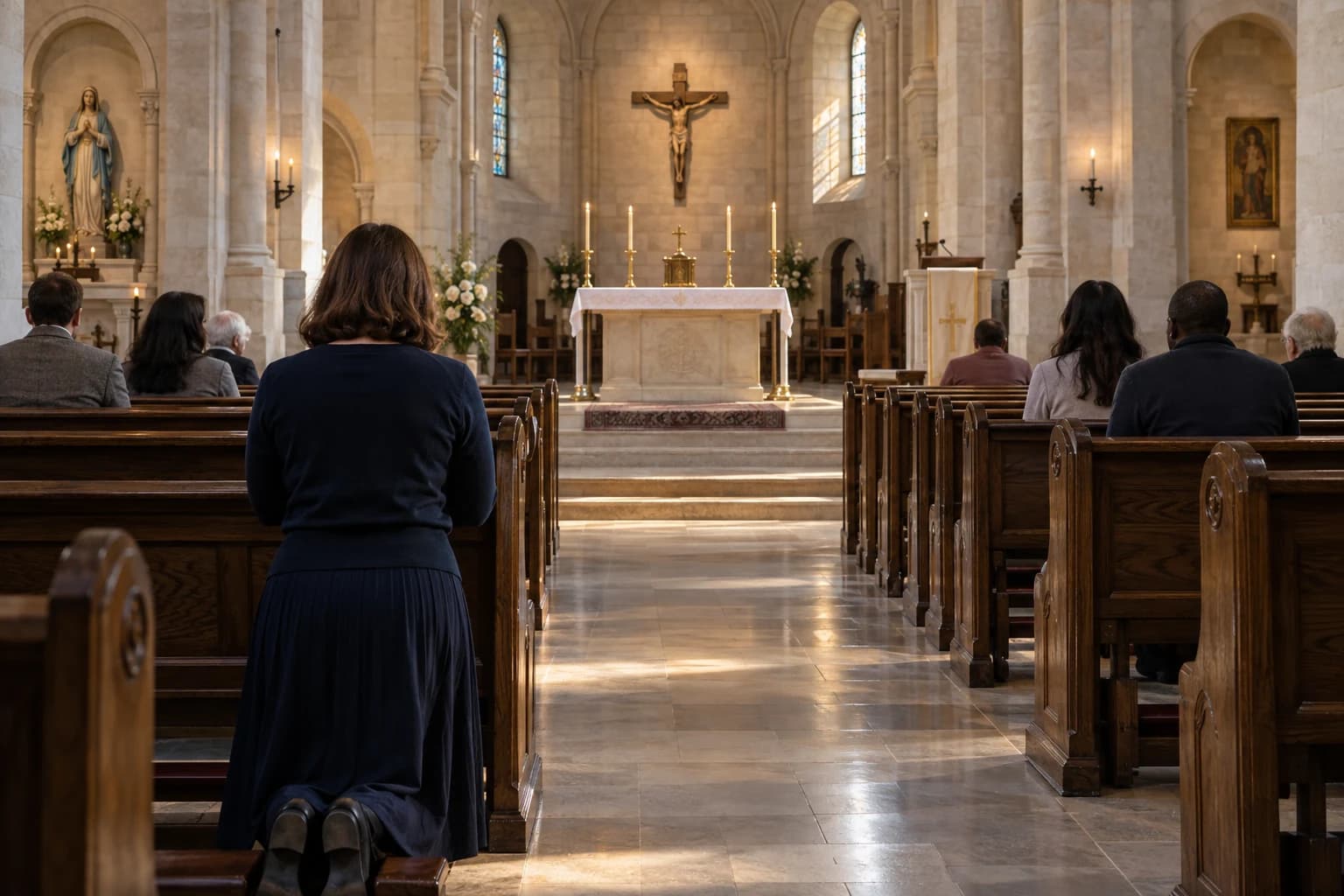
At every Mass, the Church is drawn into the worship of heaven. Christ speaks in the Word, offers Himself to the Father, gives Himself in the Eucharist, and sends His people into the world as witnesses of His love.

Daily Oratory helps you learn the Mass prayerfully, but it does not replace the living liturgy of your parish, the teaching of your priest, or official Church guidance.

Christ gathers, speaks, offers, feeds, and sends.

A reverent guide to the altar, the Word, the Eucharistic sacrifice, and the sacred mission flowing from the dismissal.

Begin with the Eucharist

Why the Mass matters

The center of Catholic worship

The Mass is the central act of Catholic worship. It is where the Church hears the Word of God, joins Christ's offering to the Father, receives the Eucharist, and is sent forth to live the Gospel.

Understanding the Mass helps the faithful participate with greater reverence, attention, gratitude, and love.

  • The Mass is worship, sacrifice, meal, memorial, and communion.
  • The Mass makes present Christ's one sacrifice in a sacramental way.
  • The Mass unites the Church on earth with the worship of heaven.
  • The Eucharist is the source and summit of Christian life.
  • The Mass forms us to become what we receive.

Heaven on Earth

Earthly worship joined to heaven

The Mass is not isolated from heaven. In the liturgy, the Church joins the angels and saints in worshiping God. The prayers, Scripture, altar, sacrifice, and Eucharist all point toward the heavenly liturgy.

  • The angels and saints are present in worship.
  • The altar points to sacrifice and banquet.
  • The Eucharist is communion with Christ.
  • The Sanctus joins the hymn of heaven.
  • The Mass sends us back into daily life changed.

Walk through the Mass

A simple roadmap from preparation to mission

1. Before Mass

Preparation, silence, intention, and readiness for worship.

Key action: Arrive early, quiet distractions, offer intentions.

Spiritual meaning: Prepare the heart before the liturgy begins through silence, recollection, and intentional prayer.

Learn More

2. Introductory Rites

The Church gathers as one body and turns toward worship.

Key action: Stand, respond, and enter the liturgy with humility.

Spiritual meaning: The assembly is gathered into one body and disposed to hear the Word and celebrate the Eucharist.

Learn More

3. Liturgy of the Word

God speaks through Scripture and the Church responds in faith.

Key action: Listen for one phrase, one truth, and one action.

Spiritual meaning: God speaks to His people through the Scriptures, and the Church answers in faith and prayer.

Learn More

4. Liturgy of the Eucharist

Christ's sacrifice is sacramentally made present on the altar.

Key action: Offer your life with the gifts and adore in faith.

Spiritual meaning: Bread and wine are offered, thanksgiving is made, and Christ's sacrifice is sacramentally made present.

Learn More

5. Communion Rite

The faithful prepare to receive the Eucharist and give thanks.

Key action: Receive reverently and make thanksgiving.

Spiritual meaning: The faithful prepare to receive Christ and express unity with God and the Church.

Learn More

6. Concluding Rites

The Church is blessed and sent into the world on mission.

Key action: Receive the blessing as a real sending.

Spiritual meaning: The Church receives a blessing and is sent into the world to live the Gospel.

Learn More

7. After Mass

Thanksgiving and daily mission flow from what has been received.

Key action: Carry the grace of the Eucharist into work, home, and mercy.

Spiritual meaning: Thanksgiving and mission help the grace of the Eucharist take deeper root in daily life.

Learn More

Before Mass

Prepare the heart

Mass begins before the opening hymn. Preparation helps the heart become attentive, humble, and ready to receive Christ.

A simple prayer before Mass

Lord Jesus, prepare my heart to worship You with reverence, listen to Your Word, and receive Your grace with gratitude. Amen.

Before Mass: Prepare the heart

Arrive with reverence, recollection, and prayerful attention.

What happens

The faithful gather, enter the church, and prepare inwardly before the liturgy begins.

Why it matters

Preparation helps the heart move from distraction to worship and from hurry to receptivity.

How to participate

Arrive early if possible, quiet distractions, offer intentions, and ask for grace to listen and adore.

Introductory Rites

Gathered into one body

The Introductory Rites gather the faithful into one body, dispose the heart for worship, and prepare the assembly to hear the Word of God and celebrate the Eucharist.

Entrance chant or hymn

The liturgy begins as the Church gathers in worship.

What happens

The priest and ministers enter while a chant, antiphon, or hymn accompanies the procession.

Why it matters

The entrance expresses unity, pilgrimage, and the Church coming together before God.

How to participate

Stand, sing if you are able, and let the opening moments gather your attention toward worship.

Sign of the Cross and greeting

The Mass begins in the name of the Trinity and with a liturgical greeting.

What happens

The priest leads the Sign of the Cross and greets the people.

Why it matters

The Church remembers Baptism, confesses the Trinity, and acknowledges that the Lord gathers His people.

How to participate

Make the Sign of the Cross attentively and respond with faith.

Penitential Act

The faithful acknowledge sin and ask for mercy.

What happens

The assembly is invited to call to mind sins and ask the Lord for mercy.

Why it matters

This humble beginning disposes the heart for worship and reminds us of our need for grace.

How to participate

Examine yourself briefly, pray honestly, and entrust yourself to God's mercy.

Kyrie Eleison

A simple prayer asking Christ for mercy.

What happens

The assembly calls on the Lord with the ancient cry: Lord, have mercy; Christ, have mercy.

Why it matters

The Kyrie keeps the focus on Christ, the healer and Savior.

How to participate

Pray the responses slowly and let them become a sincere appeal from the heart.

Gloria

A hymn of praise to the Father, Son, and Holy Spirit.

What happens

On prescribed days the Church sings or says this ancient hymn of praise.

Why it matters

The Gloria lifts the heart from repentance into adoration and joy.

How to participate

Pray it as praise rather than reciting it mechanically.

Collect

The priest gathers the prayers of the people into one opening prayer.

What happens

After a brief silence, the priest prays the Collect on behalf of the Church.

Why it matters

The Collect gathers many hearts into one prayer and names the grace sought in the liturgy.

How to participate

Hold your intentions in silence and join the prayer with an attentive Amen.

Liturgy of the Word

Christ speaks in the Scriptures

God speaks to His people through Sacred Scripture. The readings are not merely information; they are proclamation. Christ is present in His Word.

How to listen

  • Listen for one word or phrase.
  • Ask what God reveals about Himself.
  • Notice how the readings connect.
  • Carry one action into the week.

First Reading

A reading from Scripture, often from the Old Testament.

What happens

A lector proclaims the first reading chosen by the Church's lectionary.

Why it matters

The reading reveals God's saving plan and prepares for its fulfillment in Christ.

How to participate

Listen for a word or image that opens the rest of the liturgy.

Responsorial Psalm

The Church answers God's Word with the inspired prayer of the Psalms.

What happens

A psalm is sung or recited with a repeated response from the assembly.

Why it matters

The Psalms teach the Church how to praise, repent, trust, and lament.

How to participate

Pray the response intentionally and let the psalm become your own prayer.

Second Reading

A reading from the apostles, usually on Sundays and solemnities.

What happens

The assembly hears from apostolic letters or the Book of Revelation.

Why it matters

The Church is taught by the apostolic witness and formed in doctrine, charity, and hope.

How to participate

Notice how the reading deepens or echoes the first reading and Gospel.

Gospel Acclamation

The Church rises to welcome the Gospel with praise.

What happens

The Alleluia or another acclamation is sung before the Gospel.

Why it matters

The Gospel is received with special honor because it proclaims the saving words and deeds of Christ.

How to participate

Stand reverently, sing if possible, and prepare to hear the Lord.

Gospel

Christ speaks through the proclamation of the Gospel.

What happens

The deacon or priest proclaims the Gospel from the ambo.

Why it matters

The Church listens to Christ with special reverence in the Gospel.

How to participate

Trace the small crosses attentively if used locally, and listen with the desire to follow Christ.

Homily

The ordained minister helps open the Scriptures and the mystery being celebrated.

What happens

The priest or deacon preaches on the readings and liturgy.

Why it matters

The homily helps connect the proclaimed Word to faith, conversion, and life.

How to participate

Ask what the Lord is inviting you to receive, change, or live.

Creed

The Church professes the faith it has heard proclaimed.

What happens

On Sundays and solemnities, the Creed is recited or sung.

Why it matters

The Creed unites the assembly in a common profession of Catholic faith.

How to participate

Pray the words attentively, especially where they challenge or deepen your understanding.

Universal Prayer

The faithful intercede for the Church and the world.

What happens

Petitions are offered for the Church, public authorities, those in need, and the local community.

Why it matters

The baptized exercise their priestly role by praying for others.

How to participate

Join each petition sincerely and add your own silent intercessions.

Liturgy of the Eucharist

Christ offers Himself to the Father

In the Liturgy of the Eucharist, bread and wine are brought to the altar, the Church gives thanks, and Christ's sacrifice is made present sacramentally. Through the Eucharistic Prayer, the faithful are drawn into Christ's offering to the Father.

A note for beginners

  • Bread and wine are brought to the altar in simplicity, but the mystery is immense.
  • The Eucharistic Prayer is the heart of the Mass.
  • The faithful are invited not only to watch, but to join Christ's offering with their own lives.

Daily Oratory uses original summaries here and does not reproduce long Missal texts.

Preparation of the Gifts

Bread and wine are brought to the altar and prepared for the offering.

What happens

The altar is prepared and the gifts are received and placed upon it.

Why it matters

The gifts symbolize the offering of the Church's life, labor, gratitude, and need for redemption.

How to participate

Offer your work, sufferings, gratitude, and intentions with the gifts.

Prayer over the offerings

The Church asks God to receive the offering and make it fruitful.

What happens

The priest prays over the prepared gifts on behalf of the people.

Why it matters

The offering is placed before God with trust that He receives and sanctifies it.

How to participate

Join the prayer with a thoughtful Amen.

Preface

The Eucharistic Prayer begins with thanksgiving.

What happens

The priest invites the people to lift up their hearts and give thanks to the Lord.

Why it matters

The Church is drawn upward into grateful worship and holy remembrance.

How to participate

Answer attentively and consciously lift your heart to God.

Sanctus / Holy, Holy, Holy

The Church joins the praise of heaven.

What happens

The assembly sings or says the Sanctus before the heart of the Eucharistic Prayer.

Why it matters

The hymn unites earthly worship to the praise of angels and saints.

How to participate

Sing or say it with awe, remembering the Church's worship is joined to heaven.

Epiclesis

The Church asks the Holy Spirit to sanctify the gifts.

What happens

The priest invokes the Holy Spirit over the bread and wine.

Why it matters

The Spirit is at work in the Church's worship, preparing the gifts for the mystery of Christ's presence.

How to participate

Pray quietly for the Spirit to sanctify both the gifts and your own heart.

Institution Narrative and Consecration

The words and actions of Christ at the Last Supper are made sacramentally present.

What happens

The priest speaks Christ's words over the bread and wine within the Eucharistic Prayer.

Why it matters

By the power of the Holy Spirit, Christ becomes truly present in the Eucharist.

How to participate

Adore in silence and faith, especially during the elevations and bells if used.

Anamnesis and offering

The Church remembers Christ's saving mysteries and offers the spotless Victim to the Father.

What happens

The Eucharistic Prayer continues in remembrance and sacrificial offering.

Why it matters

The Church does not merely think about Christ's sacrifice; she is drawn into it sacramentally.

How to participate

Offer your life in union with Christ's self-gift.

Intercessions, doxology, and Great Amen

The Church prays for her members and glorifies the Father through Christ in the Spirit.

What happens

The Eucharistic Prayer includes remembrance of the Church and concludes in a doxology with the people's Amen.

Why it matters

The whole Church is embraced in Christ's offering, and the Great Amen seals the prayer of the people.

How to participate

Pray for the Church and say the Amen as a full act of assent.

The Real Presence

Transubstantiation and the mystery of Christ's presence

Catholics believe that at the consecration, by the power of the Holy Spirit and the words of Christ, the bread and wine become the Body and Blood of Christ. The appearances of bread and wine remain, but the substance is changed.

  • It is not merely symbolic.
  • Christ is truly present.
  • The Eucharist is His Body, Blood, Soul, and Divinity.
  • This mystery calls for adoration, reverence, thanksgiving, and worthy reception.

Communion Rite

Prepared to receive Christ

The Communion Rite prepares the faithful to receive Christ in the Eucharist and expresses unity with God and the Church.

How to receive spiritually

  • Approach reverently.
  • Receive according to Church norms.
  • Make thanksgiving after Communion.
  • If not receiving Communion, unite yourself spiritually to Christ and pray for grace.

Daily Oratory does not make personal judgments about whether someone may receive Communion. Serious questions should be brought to a priest.

Lord's Prayer

The faithful prepare for Communion with the prayer Jesus taught.

What happens

The assembly prays the Our Father together.

Why it matters

The Church approaches the Eucharist as children of the Father, asking for daily bread and mercy.

How to participate

Pray slowly and let the petitions prepare you for Communion.

Sign of Peace

The faithful exchange a sign of ecclesial peace and charity.

What happens

If invited, the people offer one another a restrained sign of peace.

Why it matters

Peace before Communion reminds the Church that sacramental communion is tied to reconciliation and charity.

How to participate

Offer peace simply and sincerely without breaking the prayerful tone of the rite.

Fraction Rite and Lamb of God

The consecrated bread is broken as the Church asks the Lamb of God for mercy and peace.

What happens

The host is broken while the assembly sings or says the Agnus Dei.

Why it matters

The broken bread points to Christ given for His people and the unity of those who share one Bread.

How to participate

Pray the invocation attentively and prepare your heart for Communion.

Invitation to Communion

The Church beholds Christ and responds in humility.

What happens

The priest shows the Eucharist and invites the faithful to the supper of the Lamb.

Why it matters

The invitation reveals both the greatness of the gift and our need for mercy.

How to participate

Make the response with humility and trust.

Reception of Holy Communion

The faithful receive Christ Himself in the Eucharist.

What happens

The faithful approach and receive Holy Communion according to Church norms.

Why it matters

Communion unites the faithful more deeply to Christ and His Body, the Church.

How to participate

Approach reverently, receive according to local norms, and remain prayerful.

Silence or hymn after Communion

The Church gives thanks in song or quiet recollection.

What happens

A hymn may be sung or a period of silence observed after Communion.

Why it matters

Thanksgiving lets the grace of Communion sink more deeply into the heart.

How to participate

Stay recollected and speak to the Lord in gratitude.

Prayer after Communion

The Church asks that the sacrament bear fruit in the lives of the faithful.

What happens

The priest prays on behalf of the people after Communion.

Why it matters

The prayer asks that what has been received sacramentally become fruitful morally and spiritually.

How to participate

Offer a final Amen and ask the Lord to make the sacrament fruitful in you.

Concluding Rites

Blessing and mission

The Mass ends with blessing and mission. The faithful are sent to glorify the Lord by their lives.

Live the Mass after leaving

  • Practice charity.
  • Forgive someone.
  • Serve the poor.
  • Carry one phrase from Scripture.
  • Make your home a place of prayer.
  • Return to prayer during the week.

Announcements

Practical notices may be given before the final blessing.

What happens

Parish announcements may be made when needed.

Why it matters

These moments remind the faithful that liturgical life is lived in a real parish community.

How to participate

Listen briefly and stay attentive so the prayerful tone is not lost.

Blessing and dismissal

The faithful are blessed and sent forth.

What happens

The priest blesses the people and dismisses them.

Why it matters

The Eucharist leads to mission: what is received at the altar must be carried into life.

How to participate

Receive the blessing attentively and hear the dismissal as a call to mission.

Recessional

The ministers depart as the assembly begins to return to daily life.

What happens

A hymn may accompany the departure of the ministers.

Why it matters

The Church leaves worship not emptied, but sent with grace and responsibility.

How to participate

Remain reverent and carry the spirit of prayer out with you.

After Mass

Thanksgiving

After Communion and after Mass, it is beautiful to remain in thanksgiving. This helps the grace of the Eucharist take root in the heart.

A short thanksgiving prayer

Lord Jesus, thank You for the gift of the Mass and the Holy Eucharist. Help me live what I have received, love as You love, and carry Your presence into the world. Amen.

After Mass thanksgiving

The faithful remain grateful and carry Eucharistic grace into ordinary life.

What happens

After Mass, some remain to pray in thanksgiving while all are called to live what they have received.

Why it matters

Thanksgiving guards against treating Communion casually and trains the heart in Eucharistic gratitude.

How to participate

Stay for a brief prayer if you can, then let charity, patience, and mission flow from the liturgy.

Sacred spaces in the church

Learn the shape of Catholic worship

Church buildings teach with space as well as words. Altar, ambo, tabernacle, font, and sanctuary all help the faithful understand what is happening in the liturgy and how to act reverently.

Altar

The central place of Eucharistic sacrifice and sacred banquet.

What it is

The altar is where the Eucharistic sacrifice is offered and where the Church gathers around the table of the Lord.

Why it matters

It points to Christ, the Cross, and the banquet of Communion. It is the liturgical center toward which the Mass moves.

What to notice

Its central location, the reverence shown to it, and the way the liturgy moves from the ambo to the altar.

Reverence practice

Notice how the altar is kissed, prepared carefully, and treated as a sacred place.

Tabernacle

The place where the Blessed Sacrament is reserved.

What it is

The tabernacle keeps the Eucharist for Communion of the sick, prayer, and adoration.

Why it matters

Because Christ is truly present in the Eucharist, the tabernacle is treated with profound reverence.

What to notice

The sanctuary lamp, the dignity of its placement, and the quiet reverence around it.

Reverence practice

Genuflect toward the tabernacle when appropriate according to local practice.

Sanctuary

The sacred area around the altar where the liturgical action unfolds.

What it is

The sanctuary is set apart for the principal liturgical actions and highlights the sacred focus of worship.

Why it matters

It helps the faithful recognize that something holy is taking place in the Church's worship.

What to notice

The altar, ambo, presider's chair, ministers, and the way movement there is purposeful.

Reverence practice

Keep attention on the liturgy rather than treating the sanctuary like an ordinary stage.

Ambo

The place from which Scripture is proclaimed.

What it is

The ambo highlights the dignity of the Word of God by giving it a stable, honored place in the liturgy.

Why it matters

The Church recognizes Christ's presence in the proclaimed Word and gives Scripture a fitting place of honor.

What to notice

The proclamation of the readings, the special reverence for the Gospel, and the connection to the homily.

Reverence practice

Listen attentively and recognize this as proclamation, not merely reading.

Nave

The main body of the church where the faithful gather.

What it is

The nave is where the people of God assemble to hear the Word, pray, sing, and join in the liturgy.

Why it matters

The Church is not only a building of sacred objects, but a people gathered for worship.

What to notice

The gathered assembly, the processions, and the shared postures of worship.

Reverence practice

Keep conversation restrained and let the nave remain a place of prayerful readiness.

Baptismal font

The place associated with Baptism and new life in Christ.

What it is

The baptismal font reminds the faithful that Christian life and Eucharistic worship flow from Baptism.

Why it matters

The baptized are able to join the Church's worship because they have been reborn in Christ.

What to notice

Its placement, dignity, and connection to the entry into sacramental life.

Reverence practice

Remember your Baptism and renew gratitude for life in Christ.

Confessional / reconciliation room

The place where the sacrament of Reconciliation is celebrated.

What it is

This space is dedicated to confession, repentance, absolution, and healing through Christ's mercy.

Why it matters

The Mass and the sacrament of mercy are deeply connected through conversion and worthy preparation.

What to notice

Its availability, its privacy, and its link to sacramental healing.

Reverence practice

Approach with trust and reverence, especially when preparing for holy days or regular confession.

Crucifix

A visible reminder of Christ crucified.

What it is

The crucifix keeps before the Church the sacrifice of Christ, made present sacramentally in the Mass.

Why it matters

The Eucharist is inseparable from Calvary; the crucifix helps the faithful remember that truth.

What to notice

Its prominence near the altar or sanctuary and its relation to the Eucharistic sacrifice.

Reverence practice

Look to the crucifix with gratitude and let it form your prayer during Mass.

Stations of the Cross

Images or markers for meditating on Christ's Passion.

What it is

Often placed along the walls of the church, the Stations help the faithful remember the road to Calvary.

Why it matters

They deepen meditation on the sacrifice made present in the Eucharist.

What to notice

Their placement around the nave and the way they invite quiet devotion.

Reverence practice

Use them prayerfully before or after Mass when appropriate.

Sacristy

The room where vestments, vessels, and liturgical items are prepared.

What it is

The sacristy supports the liturgy behind the scenes by holding and preparing what is needed for worship.

Why it matters

It reminds us that sacred worship is prepared carefully and not casually improvised.

What to notice

How ministers and sacristans serve the liturgy with quiet attention and care.

Reverence practice

Treat liturgical preparation as a real service to worship, even when unseen.

Presider's chair

The chair from which the priest leads certain prayers and rites.

What it is

The chair signifies the priest's role of presiding in the person of Christ over the liturgical assembly.

Why it matters

It reflects ordered ministry within the Church's worship.

What to notice

When the priest leads prayer from the chair and how the role differs from proclaiming at the ambo or offering at the altar.

Reverence practice

Recognize the ordered roles of the liturgy without reducing them to performance.

Credence table

A small table holding vessels and items prepared for the liturgy.

What it is

The credence table holds the items needed for the preparation of the altar and the Eucharistic liturgy.

Why it matters

It supports the reverent and orderly celebration of the Mass.

What to notice

The vessels, linens, and cruets placed there before they are brought to the altar.

Reverence practice

Let even the practical details teach you that sacred worship is carefully ordered.

Ambry / holy oils

A place where the holy oils may be kept or displayed.

What it is

The ambry may contain the oils used for Baptism, Confirmation, Holy Orders, and Anointing of the Sick.

Why it matters

It reminds the faithful that sacramental life extends beyond the Mass into the full life of the Church.

What to notice

Its dignified placement and the way it connects to the sacramental life of the parish.

Reverence practice

Remember the grace of the sacraments and pray for those receiving them.

Sanctuary lamp

A lamp indicating the Blessed Sacrament is reserved.

What it is

The sanctuary lamp quietly signals the Eucharistic presence of Christ in the tabernacle.

Why it matters

It helps the faithful know when the Eucharist is reserved and invites reverence and adoration.

What to notice

Its placement near the tabernacle and its constant witness to Christ's presence.

Reverence practice

Let the lamp prompt recollection, prayer, and reverence.

Paschal candle

A candle signifying the risen Christ, especially in Eastertime and at Baptism and funerals.

What it is

The Paschal candle is lit during the Easter season and in key rites as a sign of Christ's victory over death.

Why it matters

It connects the Mass to Baptism, the Resurrection, and Christian hope.

What to notice

Its height, prominence, and liturgical use during the seasons and sacraments.

Reverence practice

Let it remind you that every Mass is celebrated in the light of the risen Christ.

The Altar

The center of Eucharistic sacrifice and sacred banquet

The altar is the central place of Eucharistic sacrifice and sacred banquet. It points to Christ Himself, the sacrifice of the Cross, and the table of the Lord.

  • The altar is not just a table.
  • It is treated with reverence.
  • The priest kisses the altar.
  • The gifts are placed on it.
  • The Eucharistic sacrifice is offered there.
  • It may contain relics according to liturgical tradition and norms.
  • It is normally covered and prepared for the sacred liturgy.

What to notice at Mass

  • The altar's central location.
  • The reverence shown to it.
  • The movement from ambo to altar.
  • The preparation of gifts.
  • The Eucharistic Prayer.

The Tabernacle

Christ's abiding Eucharistic presence

The tabernacle is the place where the Blessed Sacrament is reserved. Because Christ is truly present in the Eucharist, the tabernacle is treated with profound reverence.

  • The sanctuary lamp indicates the Blessed Sacrament is reserved.
  • Catholics genuflect toward the tabernacle when appropriate.
  • The tabernacle supports Communion for the sick and Eucharistic adoration.
  • It reminds the faithful of Christ's abiding presence.

The Ambo

The place of proclamation

The ambo is the place from which Scripture is proclaimed. It highlights the dignity of the Word of God.

  • Readings are proclaimed from the ambo.
  • The Gospel receives special reverence.
  • The homily opens the Word.
  • The ambo is distinct from ordinary lecterns where possible.

Sacred vessels and linens

Ordinary-looking objects, sacred use

These objects are beginner-friendly windows into the Church's care for the Eucharist.

vessel

Chalice

The cup that holds the Precious Blood.

How it is used: Used during the Eucharistic liturgy for the wine that becomes the Blood of Christ.

Why it matters: Because it is used for the Eucharist, it is treated with particular care and reverence.

vessel

Paten

A plate or dish that holds the bread for consecration.

How it is used: Placed on or near the altar to hold the host or hosts.

Why it matters: It serves the Eucharistic offering and reflects the dignity of the sacrament.

vessel

Ciborium

A covered vessel used to hold consecrated hosts.

How it is used: Used for distributing Holy Communion and for reserving the Eucharist in the tabernacle.

Why it matters: It is connected directly to the reservation and distribution of the Blessed Sacrament.

vessel

Cruets

Small containers for wine and water.

How it is used: Brought forward or placed on the credence table for use during the preparation of the gifts.

Why it matters: Even small liturgical items help the Church celebrate the Eucharist with order and dignity.

linen

Corporal

A square linen cloth spread on the altar.

How it is used: Placed beneath the chalice, paten, and ciboria during the Eucharistic liturgy.

Why it matters: It helps protect reverence for the Eucharistic species and the altar.

linen

Purificator

A linen used to wipe the chalice and related vessels.

How it is used: Used during and after Communion for purification of vessels.

Why it matters: Its use reflects the care shown to what has held the Precious Blood.

linen

Pall

A stiff square cover placed over the chalice when needed.

How it is used: Placed over the chalice to protect its contents.

Why it matters: It serves practical reverence and order in the celebration.

linen

Lavabo towel

A towel used when the priest washes his hands.

How it is used: Used with the lavabo rite during preparation of the altar.

Why it matters: It is a small sign within a larger pattern of liturgical care and symbolic purification.

linen

Chalice veil

A covering for the chalice where used.

How it is used: Placed over the chalice before use in some places or celebrations.

Why it matters: It expresses dignity and care for sacred vessels.

linen

Burse

A case that may hold the corporal where used.

How it is used: Used in some liturgical settings as part of the chalice set.

Why it matters: It reflects longstanding habits of reverent preparation.

Vestments

Signs of sacred ministry

Vestments are not costumes. They signify sacred ministry, liturgical role, and the solemnity of worship.

Alb

The basic white garment worn by ministers.

How used: Worn beneath other vestments by clergy and certain ministers.

Why it matters: It signifies baptismal dignity and readiness for sacred ministry.

Cincture

A cord tied around the alb where needed.

How used: Used to secure the alb and complete the vesture.

Why it matters: It serves both practical and symbolic order in vesting.

Stole

A vestment signifying ordained ministry.

How used: Worn by priests and deacons according to their office.

Why it matters: It signifies the sacred service of ordained ministry in the Church.

Chasuble

The outer vestment worn by the priest at Mass.

How used: Worn over the alb and stole during the celebration of Mass.

Why it matters: It marks the priest's liturgical role and the solemnity of Eucharistic worship.

Dalmatic

The proper vestment of the deacon at Mass.

How used: Worn by the deacon over the alb and stole in more solemn celebrations.

Why it matters: It identifies the deacon's liturgical role in service and proclamation.

Cope

A processional or ceremonial vestment used in certain rites.

How used: Worn in processions, blessings, and some non-Mass liturgies.

Why it matters: It reflects the Church's ceremonial and devotional tradition.

Humeral veil

A veil used for carrying or blessing with sacred objects in certain rites.

How used: Used, for example, in Benediction or when handling the monstrance reverently.

Why it matters: It draws attention away from the minister and toward Christ truly present.

Liturgical Colors

Colors that teach the season

White / Gold

Joy, Christmas, Easter, solemnities, and saints who were not martyrs.

Green

Ordinary Time and growth in discipleship.

Violet / Purple

Advent, Lent, penance, and preparation.

Red

The Passion, martyrs, the Holy Spirit, Palm Sunday, Good Friday, and Pentecost.

Rose

Gaudete Sunday and Laetare Sunday.

Black

May be used in some places for Masses for the dead, according to norms.

Explore liturgical seasons

How to participate

Participate more prayerfully

Arrive early

Let this become a simple, concrete practice instead of trying to master everything at once.

Listen to the readings

Let this become a simple, concrete practice instead of trying to master everything at once.

Sing and respond

Let this become a simple, concrete practice instead of trying to master everything at once.

Offer your heart with the gifts

Let this become a simple, concrete practice instead of trying to master everything at once.

Pray the Eucharistic Prayer attentively

Let this become a simple, concrete practice instead of trying to master everything at once.

Receive Communion reverently

Let this become a simple, concrete practice instead of trying to master everything at once.

Make thanksgiving

Let this become a simple, concrete practice instead of trying to master everything at once.

Live the dismissal

Let this become a simple, concrete practice instead of trying to master everything at once.

Bring children patiently and lovingly

Let this become a simple, concrete practice instead of trying to master everything at once.

Ask questions and keep learning

Let this become a simple, concrete practice instead of trying to master everything at once.

Common questions about Mass

A gentle FAQ for beginners and returning Catholics

Why do Catholics go to Mass every Sunday?

Sunday is the Lord's Day, the weekly celebration of Christ's Resurrection. The Church calls Catholics to worship God, hear His Word, and receive grace through the Eucharist.

Is the Mass a sacrifice?

Yes. The Mass is the sacramental making-present of Christ's one sacrifice on Calvary. It does not repeat the Cross, but draws the Church into that same saving offering.

What does “source and summit” mean?

It means the Eucharist is both the fountain from which Christian life receives grace and the highest act of worship toward which Christian life is ordered.

What is the difference between Mass and a prayer service?

A prayer service may include Scripture, song, and intercession, but the Mass includes the Eucharistic sacrifice and Holy Communion. That makes the Mass unique and central.

Why do Catholics stand, sit, and kneel?

These postures express prayer with the body. Standing can show reverence and readiness, sitting can show attentive listening, and kneeling can show adoration and humility.

Why does the priest kiss the altar?

The kiss honors the altar as a sign of Christ and of the sacrifice offered there. It is a gesture of reverence, love, and liturgical recognition.

Why is incense used sometimes?

Incense is a biblical sign of prayer rising to God and of sacred honor. It can be used to show reverence for the altar, Gospel, gifts, priest, and people.

Why do we confess sins at the beginning?

The Penitential Act helps the faithful acknowledge the need for mercy and enter worship humbly. It prepares the heart, though it is not the same as sacramental confession.

What is the Gloria?

The Gloria is an ancient hymn of praise to the Trinity. It is used on Sundays outside Advent and Lent, and on solemnities, feasts, and certain celebrations.

Why are there different readings?

The Church gives a cycle of readings so the faithful can hear a wide range of Scripture across Sundays, seasons, feasts, and weekdays.

Why is the Gospel special?

The Gospels proclaim the words and deeds of Jesus in a unique way. The Church honors the Gospel with special acclamations, gestures, and reverence.

What happens at the consecration?

By the power of the Holy Spirit and the words of Christ spoken by the priest, the bread and wine become the Body and Blood of Christ, while the appearances remain.

What is transubstantiation?

It is the Church's way of naming the real change that takes place in the Eucharist: the substance of bread and wine becomes Christ Himself, though the outward appearances remain.

Why do Catholics genuflect?

Genuflection is a bodily sign of adoration shown to Christ truly present in the Blessed Sacrament, especially when the tabernacle is present.

What is the tabernacle?

The tabernacle is the place where the Blessed Sacrament is reserved after Mass for Communion of the sick, prayer, and adoration.

Why can’t everyone receive Communion?

Holy Communion expresses both union with Christ and full communion with the Church. Questions about readiness or eligibility should be brought to a priest, not decided by a website.

What should I do if I cannot receive Communion?

Remain prayerful, ask the Lord for grace, and unite yourself spiritually to Him. Many people make a prayer of spiritual communion and remain in reverent thanksgiving.

What should I do after Communion?

Give thanks. Speak to the Lord quietly, offer your heart, and ask for grace to live what you have received.

What does the dismissal mean?

The dismissal sends the faithful into the world with a mission: to glorify the Lord by their lives and carry Eucharistic charity into ordinary life.

Mass for beginners

If you are new to Mass

  • You are welcome to come and observe.
  • Sit where you can follow along.
  • Stand, sit, and kneel with the congregation as you are able.
  • Listen for the Word of God.
  • Do not worry if you do not understand everything.
  • If you are not Catholic or not prepared to receive Communion, remain in the pew and pray.
  • Speak with a priest, deacon, OCIA leader, or parish staff if you want to learn more.

Children and families at Mass

Helping children enter the Mass

Read the Gospel before Sunday.

Point out the altar, ambo, tabernacle, and crucifix.

Teach simple responses.

Bring a small Mass book.

Whisper short explanations.

Practice thanksgiving after Communion.

Be patient and consistent.

Celebrate small moments of attention and reverence.

The Mass and daily life

Live what you receive

The Mass sends Catholics into the world to live Eucharistic lives. The dismissal is not an ending only; it is a mission.

Forgive.
Serve.
Pray.
Witness.
Feed the hungry.
Visit the lonely.
Protect Sunday as the Lord's Day.
Keep a weekly Mass reflection journal.

Trusted sources

Continue with official and trusted references

Daily Oratory summarizes Catholic teaching and links to official sources. It does not reproduce long copyrighted Church texts.

Catechism of the Catholic Church

See the Eucharist section and sacramental teaching in the Vatican edition of the Catechism.

Open source

USCCB Mass resources

Helpful Catholic resources related to the Mass, liturgy, and the Order of Mass.

Open source

USCCB Daily Readings

Read the daily Mass readings and pray with the lectionary of the Church.

Open source

General Instruction of the Roman Missal

A major reference for understanding how the Roman Rite is celebrated.

Open source

Related Daily Oratory tools

Keep learning with the rest of the oratory

Church Fathers

Learn how early Christians understood the Eucharist and worship.

Open Church Fathers

Devotions

Deepen reverence for Christ through prayer and devotion.

Open Devotions

Indulgences

Learn how the Church speaks about grace, mercy, and holy works.

Open Indulgences

Confession

Prepare for the sacrament of mercy and return to the altar with peace.

Open Confession

Formation

Grow in doctrine, virtue, prayer, and daily discipleship.

Open Formation

Pastoral note

Daily Oratory helps users understand the Holy Mass more prayerfully, but it does not replace attendance at Mass, parish catechesis, sacramental guidance, or personal conversation with a priest. Questions about receiving Communion, liturgical norms, parish practice, or spiritual struggles should be brought to the proper pastoral authority.

Daily Oratory provides original summaries and formation guidance for learning the Mass. It does not reproduce full copyrighted liturgical texts, Missal texts, or video transcripts. For official liturgical texts and local guidance, consult your parish, diocese, and approved Church resources.

A final encouragement

The Mass should become more understandable as you keep returning to it, but it should never become small. Learn its structure, notice its symbols, and ask questions patiently. Then let the mystery remain larger than you, because that is where worship becomes wonder.