Skip to content
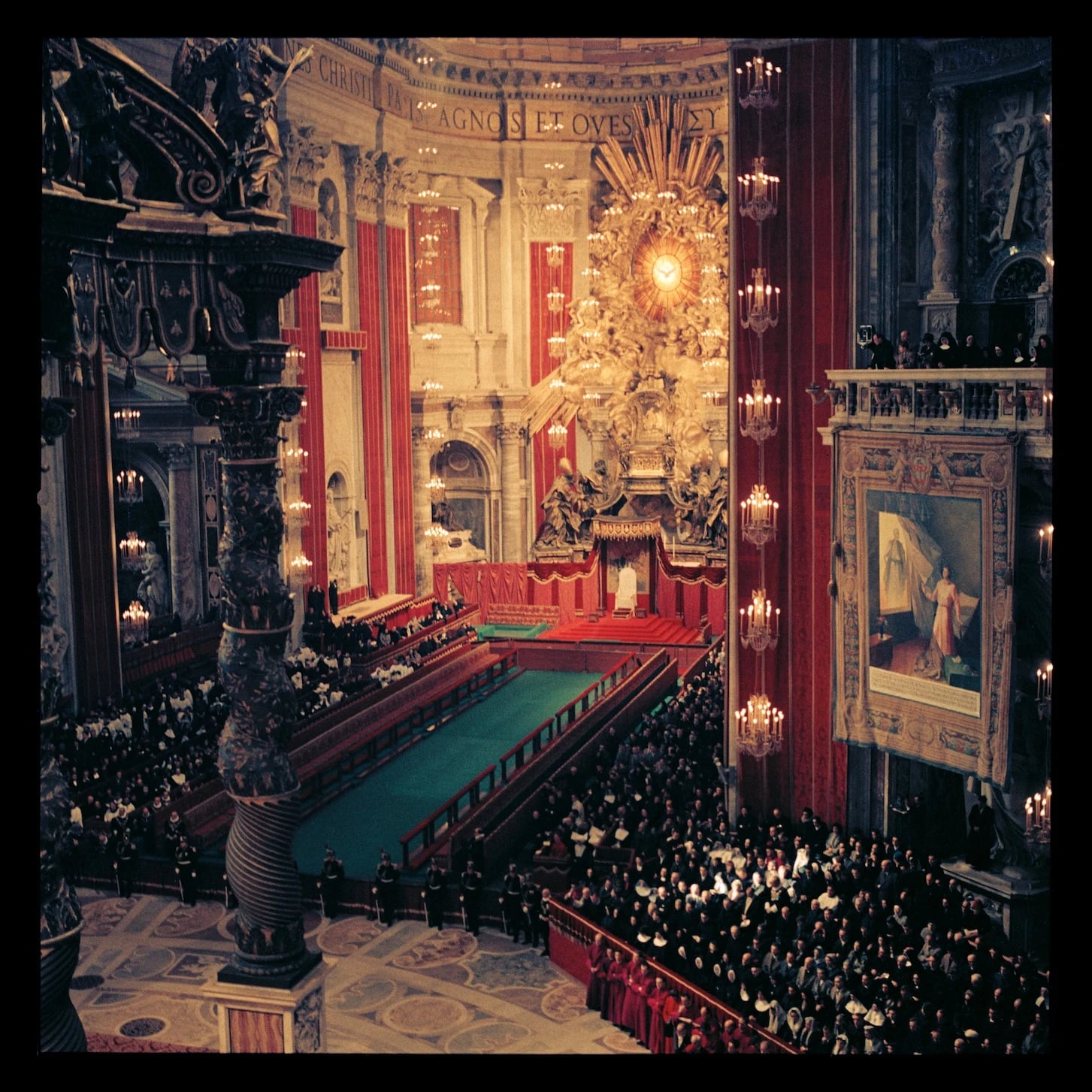
The altar and apse of Saint Peter’s Basilica prepared for a papal Mass during the Second Vatican Council
Lothar Wolleh · Photograph 005 · CC BY-SA 3.0

The Second Vatican Council

1962 to 1965

Vatican II
and the Mass

A Richer Encounter with Scripture and the Church’s Prayer

How the Council’s call to renewal opened a broader encounter with the Word of God and invited Catholics to enter more deeply into the Church’s worship.

History Scripture Worship

The purpose of renewal

Entering more deeply
into the Church’s prayer.

A helpful starting point is the Council’s pastoral goal: helping Catholics enter more deeply into the worship of God through greater understanding and participation. Vatican II called for renewal rooted in the Church’s tradition, with changes carefully evaluated for their spiritual benefit.

The Council established principles for reform. The revised Roman Missal followed under Pope Paul VI in 1969–1970. Understanding the Council and its subsequent implementation as distinct stages helps us read this history with care.

Sacrosanctum Concilium §§14, 21–23Missale Romanum

A council. A constitution. A reform.

The Council and its subsequent implementation

  1. The Council

    1962

    The Council opens

    Pope John XXIII opens the Second Vatican Council on 11 October.

  2. The Council

    1963

    A constitution on the liturgy

    Sacrosanctum Concilium is promulgated on 4 December under Pope Paul VI.

  3. The Council

    1965

    The Council closes

    Paul VI closes the Council on 8 December. Its work now enters a new stage.

  4. Implementation

    1969–70

    The revised Roman Missal

    Paul VI promulgates the revised Missal in 1969; the first Latin typical edition appears in 1970.

Council datesConstitution on the liturgyPaul VI’s reformThe 1970 edition (USCCB, PDF)

Continuity and renewal

What changed in the
celebration of Mass?

Here, the earlier celebration means the Roman liturgy expressed in the 1962 Missal, commonly called the Traditional Latin Mass. The comparison describes the principal readings and selected ritual features; Scripture was already woven throughout the earlier liturgy’s prayers and chants.

Selected features of the 1962 Roman Missal and the reformed Roman liturgy
At a glanceThe 1962 Roman MissalThe reformed Roman liturgy
Principal readings before the homilyGenerally an Epistle and Gospel, repeated annually on the same Sundays.Sundays normally have three readings within a three-year cycle. Solemnities have three readings, with their own appointed texts.
The Old TestamentMore limited representation among the principal readings.A regular Sunday first reading, usually from the Old Testament; Acts of the Apostles during Easter.
Weekday readingsOften reused the preceding Sunday’s readings or those of a saint’s Mass; Lent and certain other days already had proper readings.A much broader selection assigned throughout the year, with a two-year cycle of first readings in Ordinary Time.
The Eucharistic PrayerThe Roman Canon.The Roman Canon retained as Eucharistic Prayer I, alongside additional Eucharistic Prayers.
Congregational prayerParticipation expressed through the earlier ritual structure.Expanded acclamations and the restored Prayer of the Faithful.

Principal readings before the homily

The 1962 Roman Missal
Generally an Epistle and Gospel, repeated annually on the same Sundays.
The reformed Roman liturgy
Sundays normally have three readings within a three-year cycle. Solemnities have three readings, with their own appointed texts.

The Old Testament

The 1962 Roman Missal
More limited representation among the principal readings.
The reformed Roman liturgy
A regular Sunday first reading, usually from the Old Testament; Acts of the Apostles during Easter.

Weekday readings

The 1962 Roman Missal
Often reused the preceding Sunday’s readings or those of a saint’s Mass; Lent and certain other days already had proper readings.
The reformed Roman liturgy
A much broader selection assigned throughout the year, with a two-year cycle of first readings in Ordinary Time.

The Eucharistic Prayer

The 1962 Roman Missal
The Roman Canon.
The reformed Roman liturgy
The Roman Canon retained as Eucharistic Prayer I, alongside additional Eucharistic Prayers.

Congregational prayer

The 1962 Roman Missal
Participation expressed through the earlier ritual structure.
The reformed Roman liturgy
Expanded acclamations and the restored Prayer of the Faithful.

For the reforms: Sacrosanctum Concilium §§30, 50–54Missale RomanumLectionary Introduction §§64–69

The table of God’s Word

More Scripture.
A wider horizon.

The earlier liturgy already contained Scripture throughout its readings, prayers and chants. The reform greatly expanded the range of biblical passages proclaimed at Mass.

The Sunday Gospel cycle
  1. Year A

    Matthew

  2. Year B

    Mark

  3. Year C

    Luke

And the Gospel of John? John appears throughout the cycle, especially during Lent and Easter, and also in Mark’s year.

Weekdays have their own rhythm.

In Ordinary Time, weekday first readings follow a two-year cycle: Year I in odd-numbered years and Year II in even-numbered years. The weekday Gospel readings repeat annually. Advent, Christmas, Lent and Easter have their own annual arrangements.

Hear the readings in conversation.

The first Sunday reading is usually chosen for its connection with the Gospel. In Ordinary Time, the second reading often follows an apostolic letter over successive weeks. This arrangement can help listeners recognize God’s promises, Christ’s fulfillment and the early Church’s response.

Sacrosanctum Concilium §51USCCB: Questions about the LectionaryLectionary Introduction §§64–69

Language and understanding

Understanding
the words we pray.

Latin, local languages
and the meaning of worship

The Council permitted wider use of the vernacular—the language people ordinarily speak—particularly in readings, instructions and certain prayers. It also explicitly retained Latin and provided for the faithful to be able to say or sing together in Latin the parts of the Ordinary of the Mass that belong to them.

The extensive vernacular celebrations familiar today developed through subsequent implementation. Hearing the Gospel and prayers in a familiar language can help children, returning Catholics, newcomers and other worshippers grasp their meaning directly.

Sacrosanctum Concilium §§36, 54

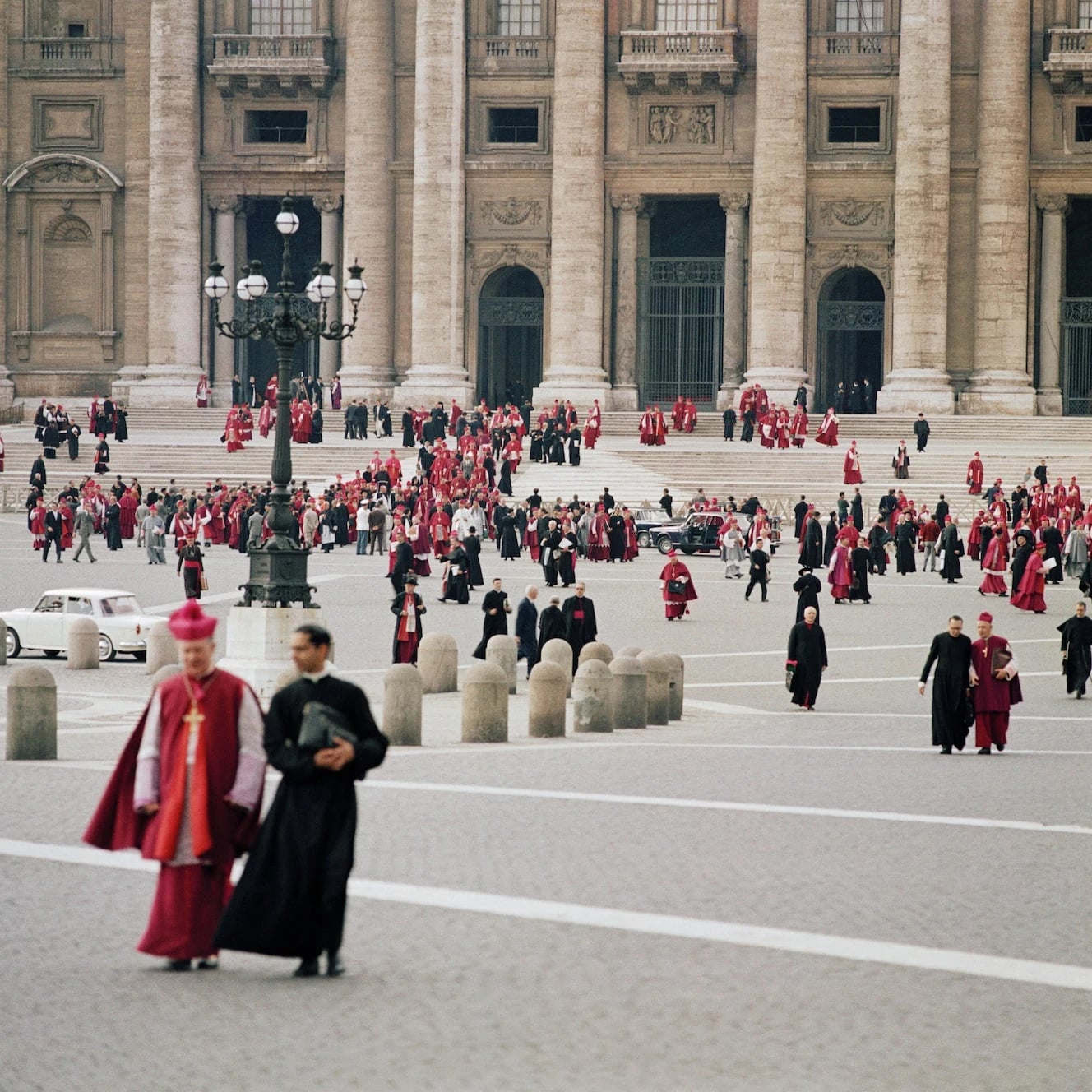
Council participants leaving Saint Peter’s Basilica during the Second Vatican Council
Leaving Saint Peter’s Basilica.
Lothar Wolleh · Photograph 006 · CC BY-SA 3.0

Heart, voice and silence

The whole person.
The whole Church.

The Council connected participation with baptism: the faithful belong to Christ and share in the Church’s worship. Participation includes attentive listening, responses, singing and sacred silence, together with an interior offering of oneself to God.

The earlier liturgy also nourished prayer and participation. The Council sought to deepen this life of worship; the reform did not create it. The celebration remains the Eucharistic Sacrifice, and the liturgies of the Word and the Eucharist belong together as one act of worship.

Paul VI explained that historical research had made ancient Christian liturgical sources more accessible. The reform drew upon these resources, restored certain practices and sought to nourish a deeper hunger for God’s Word.

Sacrosanctum Concilium §§14, 30, 47–48, 56Missale RomanumMediator Dei §§105–108

From worship into life

Carry the Word
into the week.

The intended benefits include greater biblical familiarity, clearer understanding of the prayers, and a stronger connection between Sunday worship and daily discipleship. These are invitations to spiritual growth, rather than results produced automatically by a revised ritual. Dei Verbum places them within a broader invitation for Catholics to have access to Scripture and read it prayerfully.

Dei Verbum §§21–25

Read and reflect on the daily Scriptures

For reflection or conversation

  1. Which reading or prayer has become more meaningful as you have understood it better?

  2. How does hearing the Old Testament alongside the Gospel deepen your understanding of Jesus?

  3. What helps you participate inwardly during silence?

  4. How can a parish cultivate understanding, reverence, and beautiful worship together?

  5. What would help you carry one message from Sunday’s readings into the week?

An original prayer for reflection

Lord, open my heart to Your Word and draw me more deeply into Your sacrifice of love.

Rest quietly for a moment in God’s presence.

Go to the sources

Read the Council’s teaching.

Begin with Sacrosanctum Concilium. These primary texts and Church resources offer a path for further study.

The Holy See · 1963

Sacrosanctum Concilium

The Council’s Constitution on the Sacred Liturgy

Begin with §§14, 21–24, 30, 36 and 47–56.

The Holy See · 1969

Missale Romanum

Paul VI’s apostolic constitution on the revised Roman Missal

Read the explanation of the reform, Eucharistic Prayers and expanded readings.

The Holy See · 1965

Dei Verbum

The Council’s Dogmatic Constitution on Divine Revelation

Read §§21–25 on Scripture in the life of the Church.

United States Conference of Catholic Bishops

Questions about the Lectionary

A practical explanation of the Sunday and weekday reading cycles

Explore Years A, B and C, weekday readings and the selection of Scripture.

Liturgy Office · Bishops’ Conference of England and Wales

Introduction to the Lectionary

The principles and arrangement of the readings for Mass

See §§64–69, especially the distinction between Sunday, seasonal and weekday cycles. PDF.

Bibliaclerus · Dicastery for the Clergy

General Rubrics of the 1962 Roman Missal

The earlier Missal’s rules for weekdays and readings

See nos. 298–305, 466–474 and 509–510 for weekday propers, additional lessons and the Last Gospel.

The Holy See · 1947

Mediator Dei

Pius XII on the sacred liturgy before the Council

See §§105–108 on the faithful’s participation in the Eucharistic Sacrifice.
Browse all Vatican II documents

Archival photography

Photographs by Lothar Wolleh, licensed under Creative Commons Attribution–ShareAlike 3.0. Converted to WebP; display crops vary by screen. These adaptations retain the same license. Original color and archival character preserved.